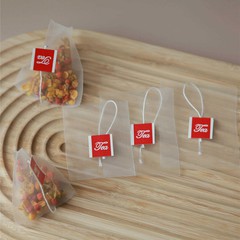


New York tea merchant Thomas Sullivan often sent tea samples to potential customers. To reduce costs, he devised a method: packing small amounts of loose tea leaves into several small silk bags. At the time, some customers who had never brewed tea before, unfamiliar with the brewing process, would simply toss the bags into boiling water. Gradually, however, people found this packaging convenient and easy to use, and the habit of using small tea bags formed. Someone suggested that the silk bags were too fine, so he switched to cotton gauze and officially began commercial sales. In 1903, Sullivan applied for a patent for tea bags, and by 1920, tea bags were widely used in the American catering industry.
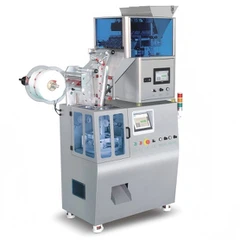
Initially, tea bags used silk bags, which were quite expensive. Later, Boston businessman William Hermanson invented heat-resistant paper fiber tea bags, making them more similar to modern tea bags in terms of materials. Initially, American tea bags were all single-bag designs. Due to their simple form and rudimentary packaging machinery, the tea leaves would concentrate inside the bag when placed in water, resulting in a slow brewing process. Later, someone discovered that packing tea leaves into double-bag designs with the leaves folded into a W shape accelerated the brewing process. In 1949, the German company Teepack produced the world's first fully automatic double-bag tea bag packaging machine based on this concept. This type of packaging then became popular in Europe, with established tea merchants such as Twinning and Whittard adopting it.
After decades of success in the American market, tea bags were introduced to Britain by Joseph Tetley in 1953.